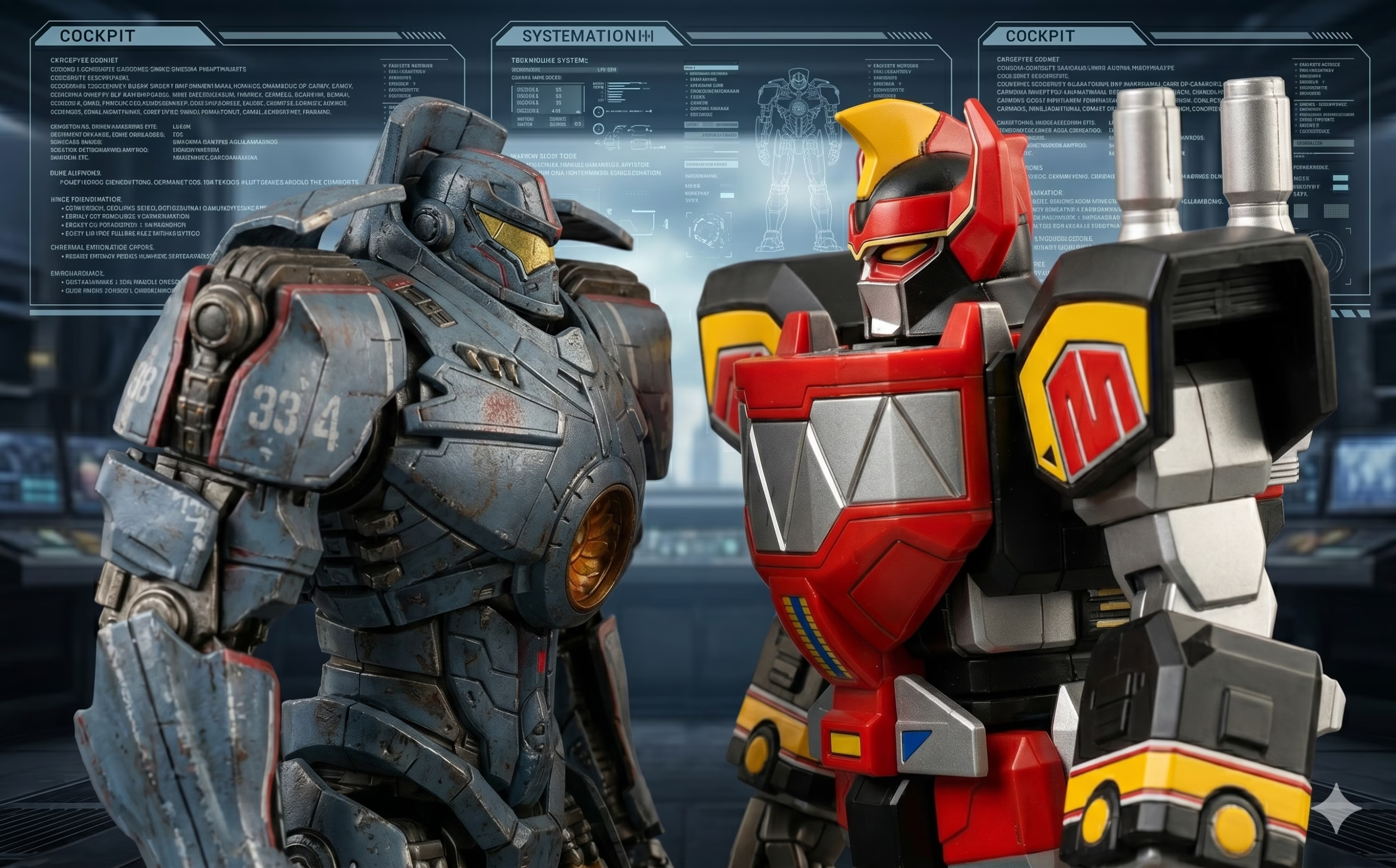
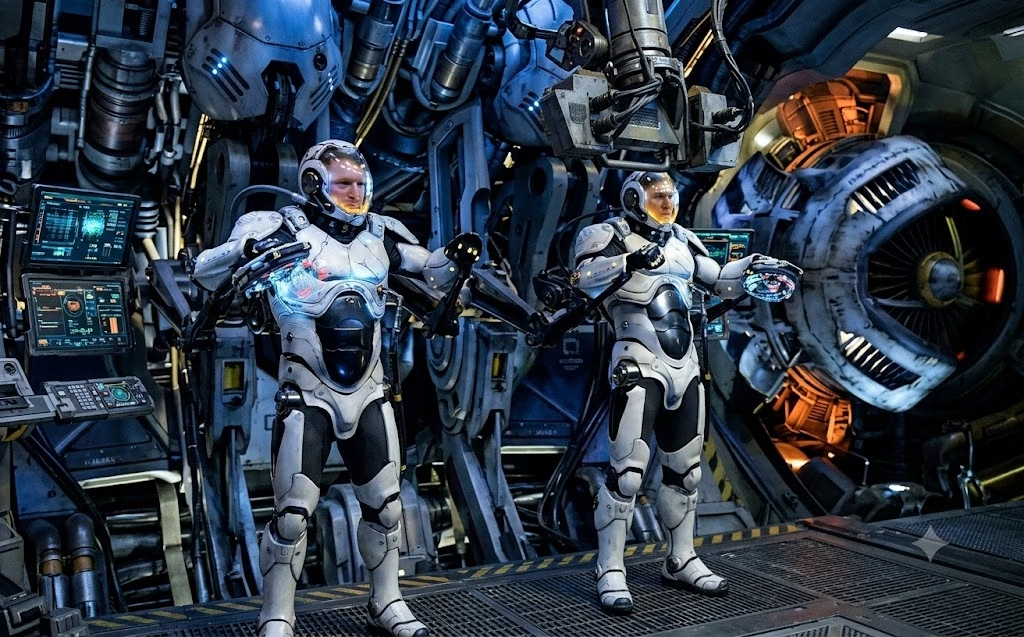
When Guillermo del Toro introduced the neural handshake and “The Drift” in Pacific Rim (2013), sci-fi fans went wild for the mecha lore. The idea that a giant robot requires two pilots to share the mental load—syncing their memories, emotions, and reflexes to move as one—felt brilliantly fresh.
But if we look closely at pop culture history, a bunch of teenagers in spandex from Angel Grove were essentially pulling off a spiritual “neural handshake” decades before humanity ever built a Jaeger.
Let’s dive into how the Mighty Morphin Power Rangers pioneered the art of collaborative mecha piloting, how the Megazord cockpit actually functions, and why it completely flips the classic anime robot trope on its head.
How Do the Power Rangers Control the Megazord?
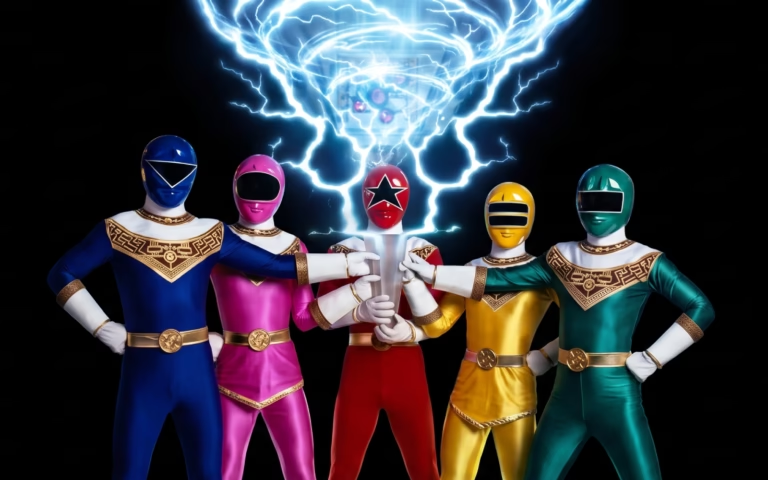
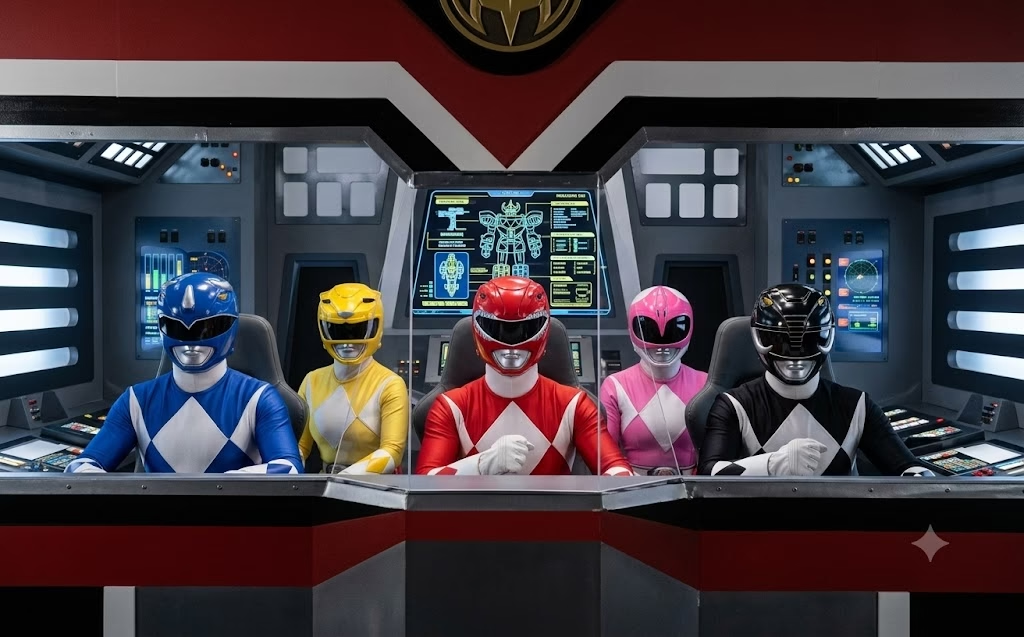
In the classic 90s series, when the individual Dinozords combined into the Megazord, all five Rangers magically ended up standing in a single, shared cockpit. On screen, they mostly just punched the air in unison. But a brilliant fan theory from Redditor emelbee923, breaks down the ergonomic and tactical reality behind how the Megazord is controlled.
Instead of just randomly jerking joysticks, the team operates on a highly sophisticated division of labor:
- Red Ranger (Movement & Primary Combat): Handles core locomotion, physical positioning, and primary hand-to-hand combat tracking.
- Blue Ranger (Systems & Diagnostics): The tech brain of the group, constantly monitoring system diagnostics, power distribution, and shield/armor integrity.
- Pink Ranger (Situational Awareness): Manages external threats to the surrounding area, scanning for civilian evacuations and coordinating with local emergency personnel response.
- Yellow Ranger (Tactical Spotter): Scans giant monsters for structural weaknesses and tactical openings to aid in combat.
- Black Ranger (Secondary Weapons Systems): Controls heavy artillery, long-range fire, and auxiliary weapons systems.
If you think about it, this is a decentralized neural handshake. Instead of two people sharing 100% of a Jaeger’s mental load, five people are sharing 100% of a massive tactical load. They are so deeply in sync, trusting each other’s specific cognitive inputs, that five brains move a single metal titan flawlessly.
Team Robot Piloting: Megazord vs. Voltron
To appreciate how unique this “one mind, five roles” dynamic is, we have to look at how other giant robots are piloted in pop culture. Take Voltron: Defender of the Universe, for example.
In Voltron, five pilots control five robotic lions that form one massive warrior. However, Voltron’s setup is much more physically segregated than the Megazord. Each Paladin remains isolated in their individual lion cockpit, essentially steering their specific “limb.” If the Left Leg pilot misses a step, the whole robot trips.
While Voltron relies on teamwork, it lacks that centralized, unified “cockpit synergy” where the entire team operates as a single, co-located organism.
The Mecha Evolution: Gundam and Evangelion’s Single-Pilot System
On the complete opposite end of the spectrum, you have iconic franchises like Mobile Suit Gundam or Neon Genesis Evangelion. Here, the mecha universe is defined by the Single-Pilot System.
A Gundam is operated by one person—often a highly stressed, isolated teenager like Amuro Ray or Shinji Ikari. The single-pilot trope is fantastic for highlighting individual isolation, the heavy psychological toll of war, and the concept of the “lonely ace.”
But a lone pilot bears 100% of the stress, the trauma, and the mechanical input. There is no one to monitor the shields while you focus on the beam saber fight.
The Power of the Poly-Drift
By contrast, the Megazord is the ultimate symbol of community and absolute synergy. The Power Rangers can’t fight isolated; they literally win through the power of friendship and synchronized cognitive labor.
Del Toro’s Jaegers needed a tragic, deep dive into each other’s memories to walk in a straight line. The Power Rangers just needed a shared attitude, a killer theme song, and a flawless division of tactical duties.
Next time you watch the Megazord slash through a giant monster, remember: you aren’t just watching a giant robot. You’re watching five minds perfectly drifting in a 90s neural handshake.
Megazord Piloting FAQs
How many pilots does it take to control the Megazord?
It takes five core Rangers to pilot the standard Mighty Morphin Megazord. While individual Dinozords can operate independently, the combined Megazord functions optimally when all five pilots are present in the central cockpit to manage their specific tactical roles.
What is the difference between a Gundam and a Megazord?
A Gundam utilizes a Single-Pilot System focused on individual mechanical skill and psychological endurance. A Megazord utilizes a collaborative, centralized team system where multiple pilots divide the tactical, defensive, and offensive operations of the robot.
How does the Megazord cockpit work?
While the TV show depicts the Rangers standing together and moving in unison, lore and fan analysis indicate that the cockpit features an advanced division of labor. Each Ranger is responsible for a dedicated sub-system, including primary combat, shields, local scanning, enemy weak-point analysis, and heavy artillery.
About the Author