The resurgence of #RenewTheAcolyte across X and Reddit is not just about a cancelled Star Wars series. It is about a revelation that reframed a familiar part of the sequel trilogy in a way fans never expected. At the heart of this renewed interest on Disney+ The Acolyte series is Qimir, also known as The Stranger, and his now-confirmed conceptual role as the first Knight of Ren.
For many fans, this single piece of lore transformed The Acolyte from a standalone experiment into a foundational chapter of Star Wars mythology.
Qimir and the Birth of the Knights of Ren
Following the release of The Art of Star Wars: The Acolyte, showrunner Leslye Headland confirmed that Qimir was deliberately written as the origin point for the Knights of Ren. This was not a fan theory retrofitted after cancellation. It was a planned trajectory.
In the High Republic era, Sith doctrine was constrained by the Rule of Two. Qimir represented something else entirely. A dark side user operating outside Sith orthodoxy, forming a belief system rooted in power, freedom, and survival rather than lineage. According to Headland, this was the narrative space where the Knights of Ren were meant to emerge.
For fans, this reframes the Knights of Ren not as vague enforcers introduced in the sequel trilogy, but as the long shadow of a philosophy that began centuries earlier.
How is Kylo Ren Related to The Acolyte
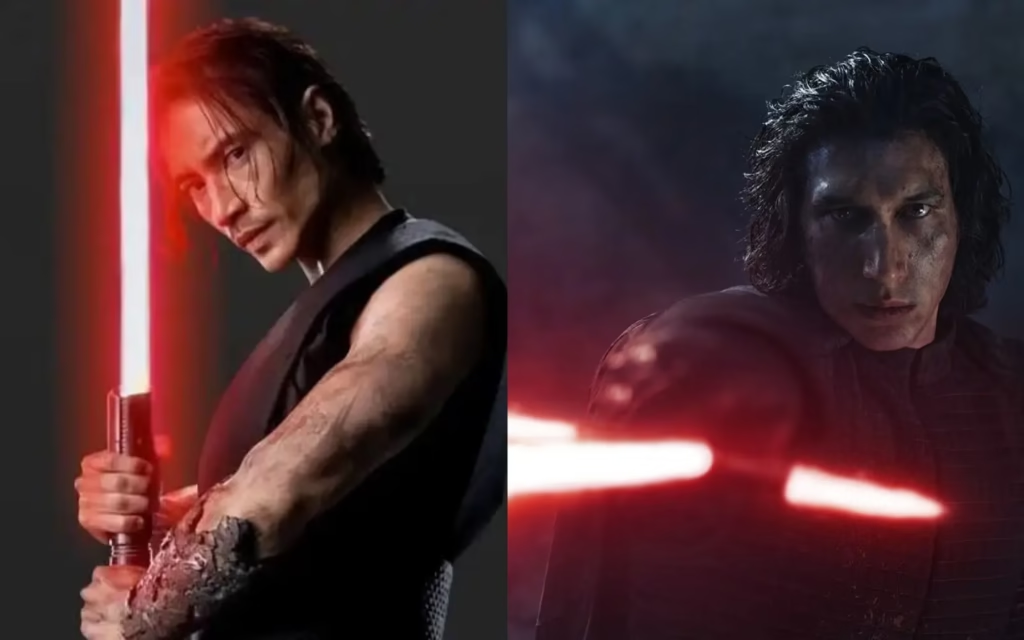
The connection between Qimir and Kylo Ren is not literal, but thematic. Kylo Ren ultimately becomes the master of the Knights of Ren, adopting their creed while rejecting the Sith title. The Acolyte was poised to show how that path began.
On Reddit, fans frequently point out how Qimir’s rejection of Jedi control mirrors Kylo’s rejection of both Luke Skywalker and Darth Vader’s legacy. Neither fully embraces Sith hierarchy. Both seek identity through power unbound by tradition.
If Qimir was the ideological spark, Kylo Ren was the culmination.
This context retroactively enriches Kylo’s arc. His choice to lead the Knights of Ren no longer feels like an aesthetic decision, but the continuation of a philosophy born from centuries of resentment toward Jedi dominance.
A Dark Side Path Beyond the Sith
One of the most compelling aspects of Qimir’s character is that he was never positioned as a Sith apprentice in waiting. Instead, he embodied a third path, one that Star Wars rarely explores in live action.
Fans argue that The Acolyte was preparing to redefine the dark side as something broader than Sith rule. The Knights of Ren, under Qimir’s influence, would have existed as a decentralized belief system rather than a master-apprentice chain.
This idea has ignited discussion across X, with many fans saying this approach would have finally given the Knights of Ren narrative weight they lacked in the sequel films.
The Unfinished Arc Fans Can’t Let Go
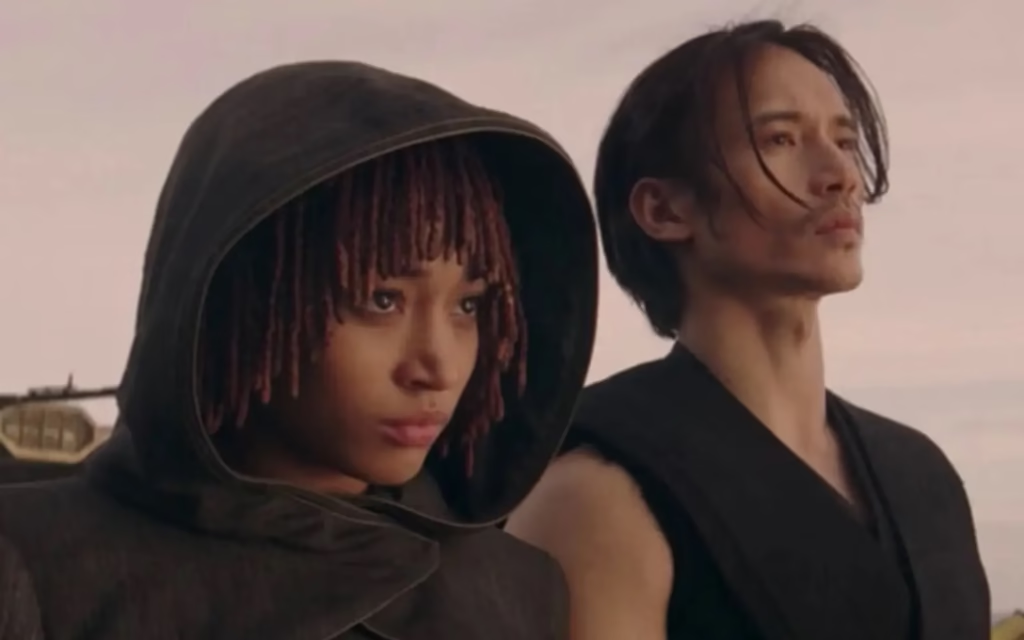
What fuels #RenewTheAcolyte is the belief that this story was cut short at the exact moment it became essential. Qimir’s arc was no longer just about mystery. It was about legacy.
Fans frequently note that Star Wars often relies on familiar bloodlines. The Acolyte offered something different: a lineage of belief rather than ancestry. Qimir didn’t need to be related to Kylo Ren. His ideas were.
That distinction is why fans keep pushing for continuation, whether through another season, a limited series, or expanded canon material.
Master Sol as the Moral Counterweight
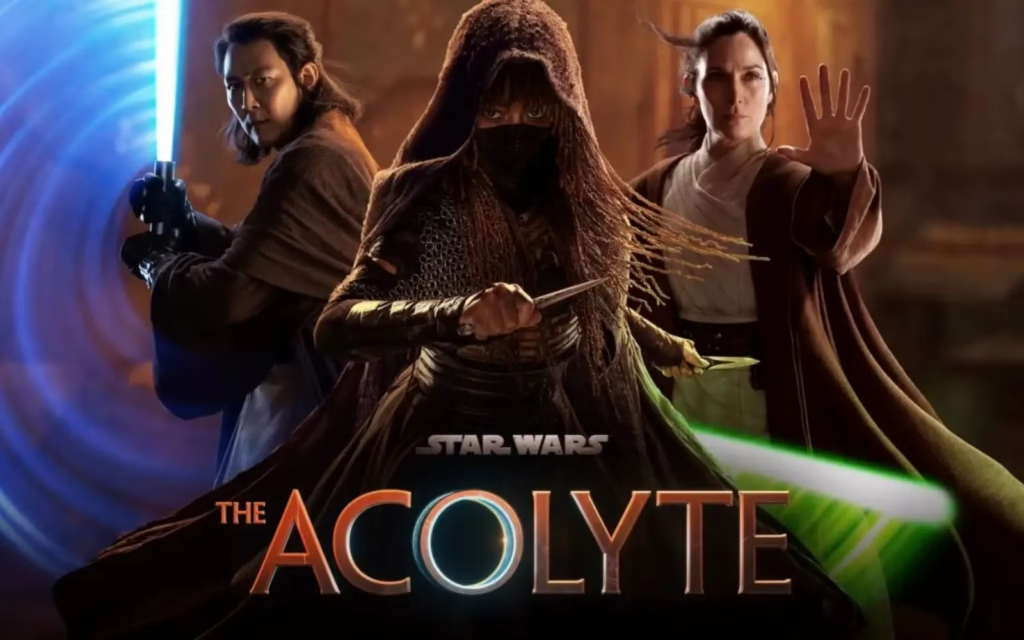
While Qimir represents ideological rebellion, Jedi Master Sol served as the emotional and moral counterbalance. Positioned lower in the narrative hierarchy but no less important, Sol embodied the Jedi Order’s internal contradictions.
Unlike Qimir’s rejection of structure, Sol struggled within it. His compassion, guilt, and emotional attachment to Osha and Mae exposed how the Jedi’s rigidity often clashes with genuine care.
Fans see Sol as the kind of Jedi whose existence explains why figures like Qimir emerge at all. When empathy is constrained by doctrine, rebellion becomes inevitable.
Two Philosophies on a Collision Course
Many Reddit discussions highlight how The Acolyte was quietly constructing a philosophical duel rather than a simple hero-villain conflict.
Qimir represented freedom through power while Sol represented restraint through compassion. Neither was framed as wholly right or wrong.
This tension is what made the show feel different, and why fans believe its cancellation robbed Star Wars of one of its most nuanced ideological setups.
Why the Trend Refuses to Die
#RenewTheAcolyte persists because it is anchored in canon-altering potential, not nostalgia. The idea that the Knights of Ren began as a response to Jedi authority, and later found their ultimate expression in Kylo Ren, is the kind of long-form storytelling Star Wars thrives on.
For many fans, The Acolyte was not just another series. It was the missing prologue to a movement that shaped the sequel era.
And until that story is finished, the conversation is not going anywhere.
About the Author