
AI isn’t just a software boom anymore, I’m afraid. AI data centres are gobbling up so much electricity that regulators, utilities and even the US state governments are starting to hit pause, audit or reroute projects. That is saying something considering US’ AI-related investment is projected to hit USD 765 billion in 2026 alone amidst the frenzy the major technology companies are showing.

As the second-largest data-centre market in the country, Texas currently has at least 335 data centres up and running, and at least 248 proposed projects in the pipeline just waiting to set up shop. Texans are understandably worked up over the whole deal as their backyards are now essentially the wild west of data centres, which prompted the state government to issue a moratorium on the approval of data centres until regulatory agencies can audit proposed data centres seeking connection to the state’s already brittle electric grid.
Think big picture on this. In the US alone, power demand could jump from 62 GW in 2025 to 76 GW in 2026 and more than double by 2030. To put that in perspective, the whole country of Spain targets 76 GW of solar photovoltaic capacity by 2030 and they are one of the powerhouses in the entire of Europe when it comes to sunshine. AI went from something that everyone and their grandmas gleefully put their paws on to a scale comparable with an entire country’s planned solar capacity. The comparison is imperfect, but it shows the scale of the build-out now being discussed. Worryingly, the scale of the data centre expansion is outpacing the resources required to support it.
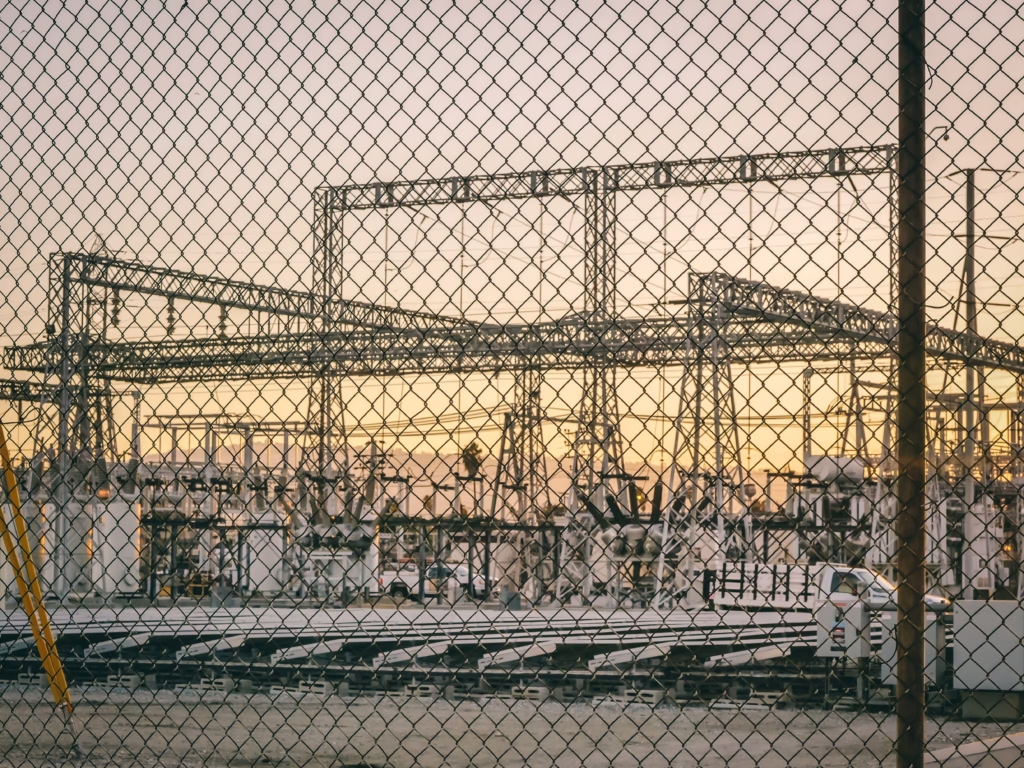
AI’s resource-hungry operations are not a foreign concept at this point. AI workloads, especially training runs, cause massive and sudden power spikes that sometimes exceed 50% above design capacity for short periods, straining an already volatile power grid. It’s like buying a more efficient car with your hard-earned money but then you start travelling three times as far every day just because you want to feel the car’s handling.
Circling back to Texas’ plight, with the audits planned to help regulate data centre industry that makes up 90% of new power requests, it’s easy to understand why the grid pushback is happening. As local opposition grows, it is worth noting that while AI holds real promise, it should not come at the expense of water, air quality and neighbourhoods. Interestingly, some developers are pairing data centres with dedicated power generation of its own to provide stability and relieve grid congestion.
Frankly, even with all these hurdles cropping up like mushrooms after a torrent, your friendly neighbourhood AI chatbots would probably be fine but your outlet behind the wall is probably sweating bullets wondering whether it could power the very computer you’re trying to generate your passport’s ID images. After all, the AI race is most likely turning into an energy race for the foreseeable future. The winners won’t be the best models with zero hallucinations, but the companies that could secure reliable and affordable power to fire its models on all cylinders.
It’s funny really, we spent years thinking AI is going to take our jobs, but its first order of business is trying to max out our power bills.
About the Author