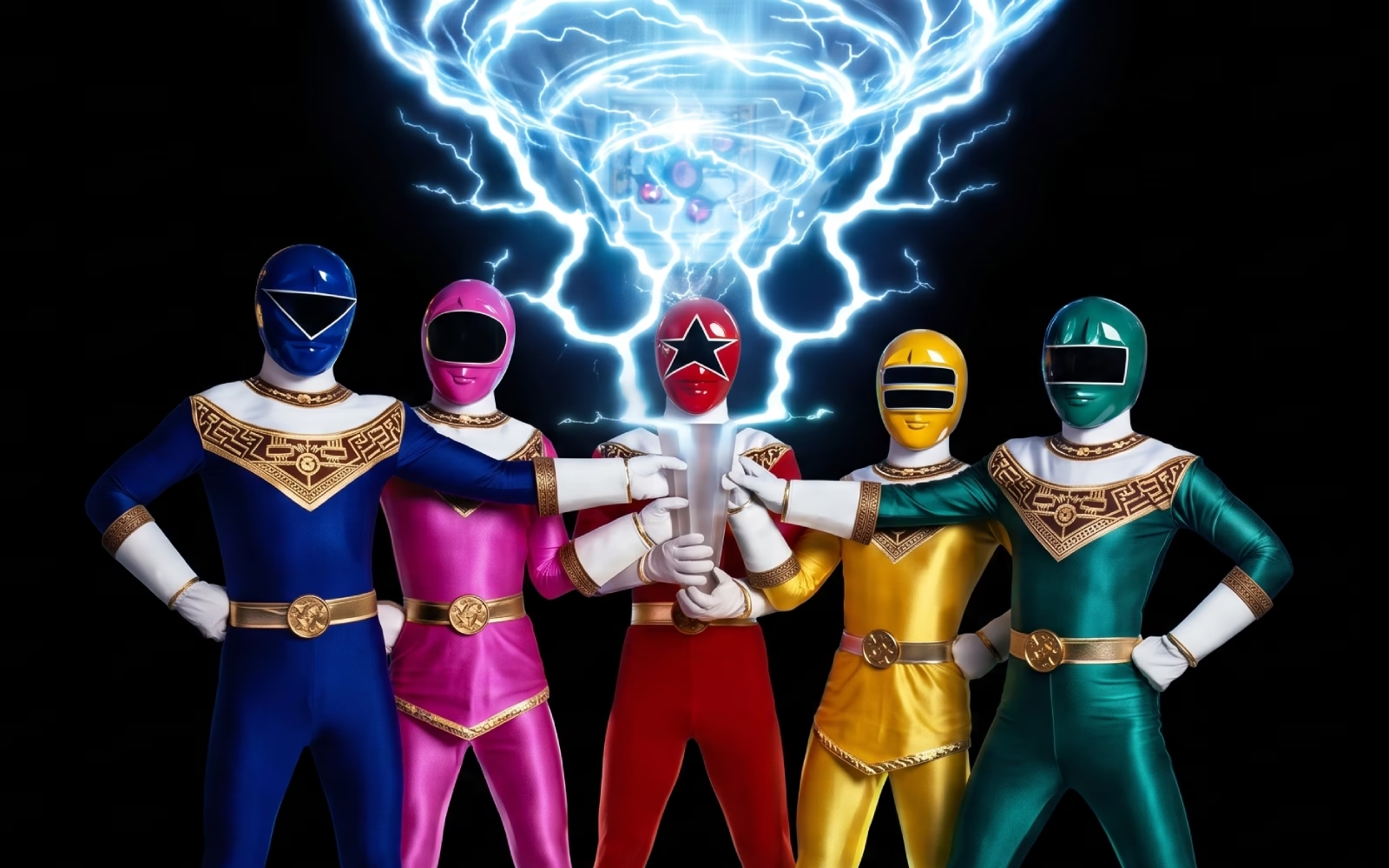
Thirty years ago today, the Power Rangers universe faced its first true apocalypse. The Command Center was reduced to literal ash, the iconic Dino Power Coins were shattered, and fans wondered if the franchise was finished.
Instead, on April 20, 1996, we got Power Rangers Zeo.
As Zeo hits its monumental 30th anniversary, it’s time to talk about why this transition era remains a masterclass in sci-fi world-building, mechanical design, and the ultimate upgrade of the concept of the Power Rangers.
The Industrial Pivot: From Prehistoric Magic to Ancient Tech
The original Mighty Morphin era was heavily rooted in magic and mysticism. The Dinozords were ancient beasts woken from the earth, powered by the, Morphin Grid and guided by a interdimensional being in a tube.
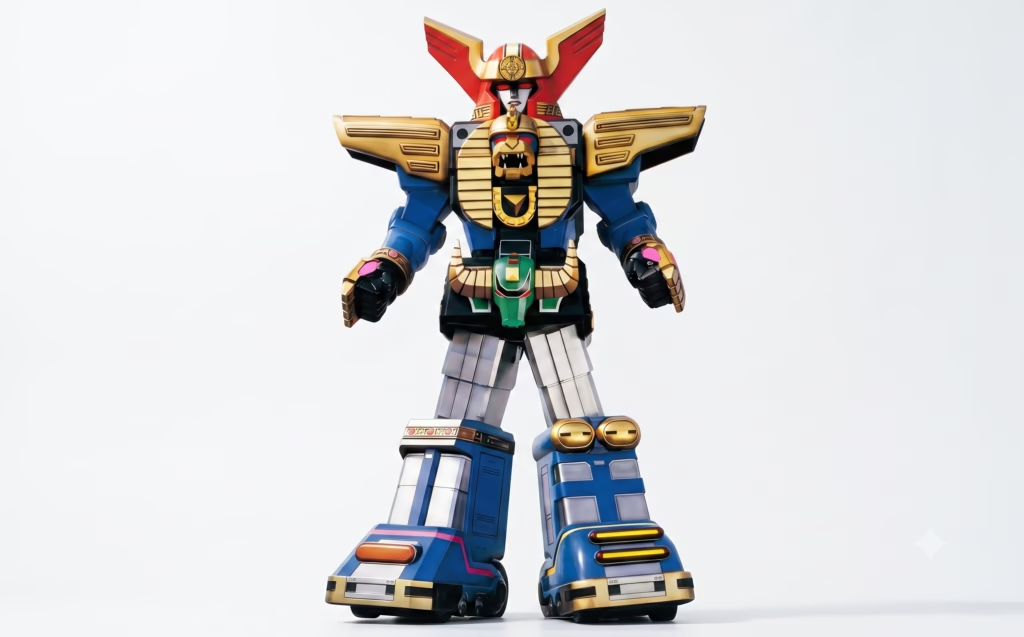
Zeo completely flipped the script, treating the new mecha setup through the lens of high-end industrial engineering. Built underground in the sleek new Power Chamber by Billy Cranston and Alpha 5, the Zeo Zords weren’t just found—they were engineered.
Instead of dinosaurs, Billy designed the Zeo Zords based on ancient global geometric and architectural mythology:
- Zeo Zord I (Pink): The imposing Moai Statues of Easter Island.
- Zeo Zord II (Yellow): The mysterious Dogu Figurines of ancient Japan.
- Zeo Zord III (Blue): The mythical Egyptian Sphinx.
- Zeo Zord IV (Green): Taurus the Bull.
- Zeo Zord V (Red): The cosmic, airborne Phoenix.
By pulling from ancient architectural wonders and combining them with advanced computer diagnostics, Zeo introduced a heavy “ancient astronaut/high-tech archeology” aesthetic that gave the show a massive, industrial sci-fi upgrade.
The Battle Helmet System: Pure Tactical Synergy
In our previous look at Megazord cockpit mechanics, we broke down how a team-piloted mech relies on a strict division of labor. Power Rangers Zeo took that “decentralized neural handshake” and physically integrated it into the robot’s combat blueprint via the Battle Helmet System.
The Zeo Megazord didn’t just have one mode of attack. Depending on which Ranger needed to take tactical control of the battle, the Megazord would swap its head armor to match that Ranger’s specific sub-Zord. This was the ultimate realization of a team moving as one mind:
- Zeo V Battle Helmet (Tommy/Red): The default Warrior Mode, utilizing the Zeo Megazord Saber for precise, high-energy physical combat.
- Zeo IV Battle Helmet (Adam/Green): Gravity Mode. It featured massive bull horns to batter opponents and allowed the team to manipulate and neutralize localized gravity fields.
- Zeo III Battle Helmet (Rocky/Blue): Pyramid Mode. This granted the Megazord advanced telekinetic powers, letting the team lift and smash Machine Empire monsters into the ground using blue laser beams.
- Zeo II Battle Helmet (Tanya/Yellow): Rocket Mode. This added side-mounted laser cannons for rapid-fire long-range artillery and doubled as rocket thrusters for space combat.
- Zeo I Battle Helmet (Kat/Pink): Cannon Mode. A massive, high-caliber crown cannon that could funnel raw energy into a single, devastating blast.
Instead of the team just standing around while the Red Ranger steered, the Battle Helmet system meant that every Ranger’s console and mental focus could instantly become the primary hard-drive of the giant robot.
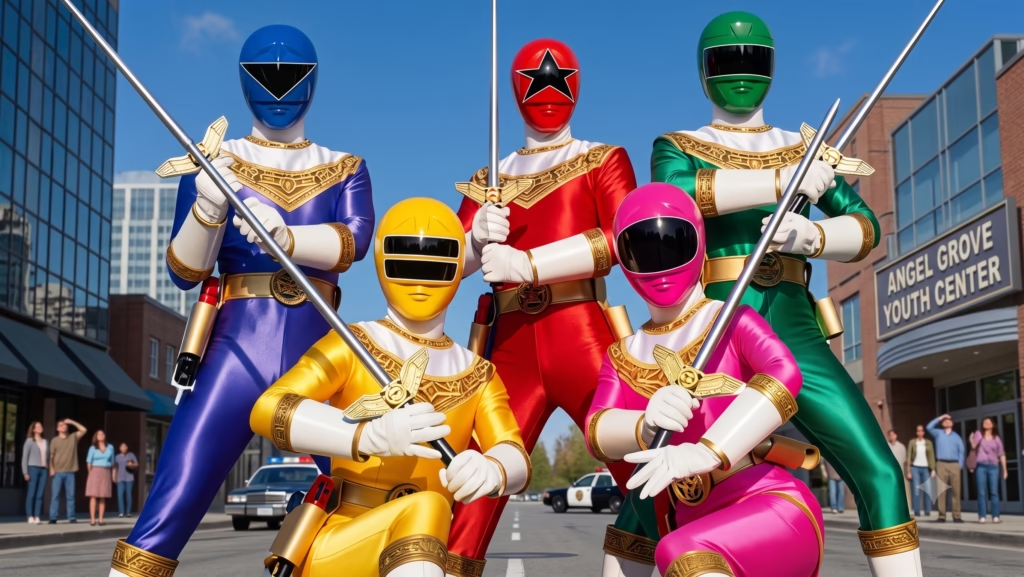
Thirty Years of Staying “Stronger Than Before”
While Mighty Morphin gets the lion’s share of casual nostalgia, Zeo is widely considered by mecha purists and hardcore fans as one of the tightest, most visually distinct seasons in the franchise’s history. It treated its giant robots not just as toys to sell, but as a complex, modular puzzle where five pilots truly functioned as a single, devastating unit.
Three decades later, the Zeo powers are canonically still out there, sitting dormant in a hidden mountain hangar. But for those who grew up watching the helmets swap and the synth guitars shred, the industrial genius of the Zeo Megazord still holds up as peak 90s mecha design.
About the Author